Why veterans struggle to sleep, and what is actually worth trying
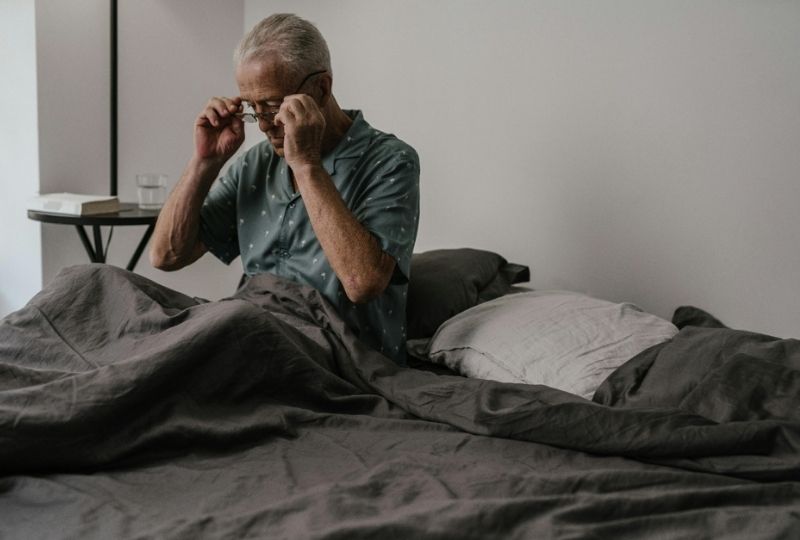
Three in the morning. Fully awake. No particular reason, except that this is just what happens now.
Sleep problems are among the most commonly reported difficulties for veterans leaving service, and among the least openly discussed. They cut across rank, regiment and length of service. They show up in veterans who saw combat and in those who did not. And they persist, often for years, in ways that gradually erode everything else.
This is not a piece about needing eight hours. It is about understanding why sleep changes after service, what is and is not worth trying, and why it matters more than many veterans give it credit for.
What service does to sleep
Military service trains the body and mind to remain alert in circumstances where alertness is survival. Irregular sleep patterns, broken rest, the ability to go from deep sleep to full operational readiness in seconds. These are not bugs in the system. They are features, deliberately developed.
The problem is that the civilian world does not switch them off. The nervous system that learned to stay half-awake does not automatically stand down when service ends. The hypervigilance that was an asset in Helmand is not particularly useful at two in the morning in a semi-detached in Swindon, but it does not know that.
For veterans with PTSD, the picture is more complex. Nightmares, hyperarousal, an association between sleep and vulnerability. The avoidance of sleep is, in a twisted way, a protective mechanism. The mind is trying to prevent something it has learned to associate with danger.
Hearing loss makes it worse
This is a connection that does not get enough attention. Tinnitus, the persistent ringing or buzzing that many veterans experience as a result of noise exposure during service, is significantly associated with sleep disruption.
In quiet environments, particularly at night, tinnitus becomes more prominent. There is no competing external noise, so the internal noise fills the space. Veterans who manage tinnitus reasonably well during the day can find that nights are considerably harder.
Audiologists often recommend background sound, not silence, as a sleep environment for people with tinnitus. Low-level consistent noise, a fan, a white noise machine, or a sleep soundscape can reduce the perceived prominence of tinnitus enough to allow sleep onset. It does not work for everyone, but it is worth trying before more complex interventions.
What the research actually supports
There is a significant gap between what veterans are told to try and what the evidence actually backs. Some genuinely useful approaches include:
Cognitive Behavioural Therapy for Insomnia, known as CBT-I, is the most evidence-backed non-pharmacological treatment for chronic sleep problems. It is not the same as standard CBT. It focuses specifically on the thoughts and behaviours that maintain insomnia and has strong results in veteran populations. It is available through the NHS, though waiting times vary.
Stimulus control, keeping the bed associated only with sleep, getting up if you cannot sleep rather than lying there, maintaining consistent wake times regardless of how the night went. These feel counterintuitive but the evidence for them is solid.
Reducing alcohol. Many veterans use alcohol to get to sleep. It does assist sleep onset but it fragments sleep architecture significantly, reducing the restorative deep sleep stages and increasing early waking. The short-term benefit makes the underlying problem worse over time.
What is probably not worth the effort
Sleep hygiene advice, the kind that involves blackout curtains, no screens and a consistent bedtime, has a modest effect at best for people with established insomnia. It is not harmful advice, but it tends to be given as if it were a solution when it is, at most, a foundation.
Over-the-counter sleep aids provide short-term help but do not address the underlying issue and can create dependency. Melatonin has reasonable evidence for jet lag and circadian rhythm disruption but weaker evidence for chronic insomnia.
The bigger picture
Sleep affects everything. Mood, cognition, pain tolerance, immune function, mental health. Veterans who are managing other conditions, physical or mental, will often find those conditions are harder to manage on poor sleep. It is rarely the only issue, but it is frequently the one that makes everything else more difficult.
Getting help with sleep is not a small thing. It is not indulgent or soft. It is addressing a root cause that affects almost everything else.Noise-induced hearing loss and tinnitus from service are compensatable conditions, and the 31 July 2026 deadline under the Matrix Agreement is approaching. Call 0800 776 5622 or visit www.justice4heroes.org to find out where you stand.


