The Veterans Conquering the World's Toughest Trails (And What They Found There)
The veterans conquering the world's toughest trails (and what they found there)
The desert. The Sahara. The summit. The question was never whether they could do it.
At the finish line in Aqaba, five veterans dismount their camels. They have ridden 1,100 kilometres across Saudi Arabian and Jordanian desert in 25 days. Behind them are the Hejaz Mountains, the Nefud Desert, temperatures swinging from below freezing to 37 degrees, and the same watering holes used by Lawrence of Arabia in 1917. Ahead of them is a quieter question.
What happens when it stops.
The question underneath all of it
From the outside, these expeditions look like feats of endurance. They are measured in miles, altitude, and conditions that most people will never experience. That is the visible part.
Underneath that is something less obvious. A search for structure, for purpose, and for something that feels real again. The environment strips everything back to essentials.
For many veterans, that is the point. The clarity of a single objective, the discipline of daily effort, and the absence of unnecessary noise. It is not about escape, it is about alignment.
The desert: following Lawrence
In January 2025, five British Special Forces veterans set off from Al Wajh in Saudi Arabia on camels, following the exact route taken by Lawrence of Arabia more than a century before. The trek covered 1,100 kilometres across two countries in 25 days, taking in the Hejaz Mountains and the vast Nefud Desert. Temperatures ranged from minus three to thirty-seven degrees. Three of the five had never ridden a camel before they started.
The ride raised funds for the Special Forces Club Benevolent Fund, which supports veterans and their families facing hardship, illness, and injury. But the structure of the challenge, the daily distance, the shared difficulty, the fixed destination, carried its own value beyond the fundraising.
They finished at Aqaba Fort on 7 February 2025.
The Sahara: six days and no way out
In April 2024, a team of British runners representing Walking With The Wounded entered the Marathon des Sables, a six-day race covering more than 250 kilometres through the Moroccan Sahara. Self-supported, relentless, run in temperatures that can reach 50 degrees. Widely regarded as one of the toughest footraces in the world.
Veterans have been entering this race for years under the WWTW banner. The combination of extreme physical demand, a clear daily objective, and a team around you maps closely onto something familiar from service. The race does not care about your rank or your history. It just keeps moving forward, and so do you.
Everest: redefining what is possible
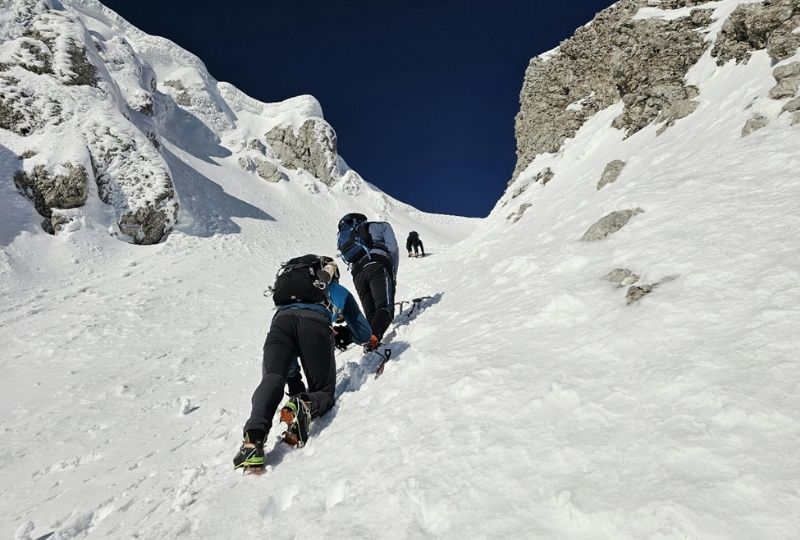
In May 2025, a team of four British military veterans set a world record by travelling from London to the summit of Everest and back in just seven days. A traditional expedition takes eight to ten weeks. This one did not.
The team included Veterans Minister and former Royal Marines Colonel Al Carns, Special Forces veteran and ThruDark co-founder Anthony Stazicker, Major Garth Miller, and Kevin Godlington, also a former Special Forces operator. They pre-acclimatised at home using hypoxic tents before leaving for Nepal, survived an avalanche on the Khumbu Icefall, pushed through 35mph winds on the final ascent, and stood on the summit at 8,849 metres.
The goal was to raise funds for veterans charities and to show what veterans are capable of long after service ends. The summit proved the point.
What they are actually looking for
It is easy to assume these challenges are about proving something. In some cases, they are. In many cases, they are not.
What veterans often describe is something quieter. A return to structure, to effort that has a clear outcome, and to a sense of progress that is not abstract. It is measurable and immediate.
There is also something about the edge itself. Not danger for its own sake, but the removal of distraction. When conditions are that demanding, everything unnecessary falls away.
Do they find it
The honest answer is not the same for everyone. Some reach the end of a challenge and feel a sense of completion. The objective is met, and something settles.
Others find something different. The experience changes them, but it does not answer everything. The search continues in another form.
And for some, stopping is the hardest part. The structure disappears again, and the question returns. What now.
The trail does not have to be extreme
Most people are not going to attempt the Sahara or Everest. That is not the point. The value is not in the scale, but in the structure behind it.
A clear objective, consistent effort, and a reason to keep moving forward. Those elements can exist in much smaller challenges. They still matter.
What these expeditions show is not just what is possible. They show what resonates.


